Does a Pressure Washer Need Water Pressure?
Yes, a pressure washer needs water pressure at its inlet, but only a modest garden-hose supply. The pump does the real work: it pulls water in and pushes it out at high pressure. A weak or starved feed makes the machine sputter, lose power or shut down.
On this page (9 sections)
- How much water pressure does a pressure washer need?
- Does a pressure washer create its own pressure?
- What happens when the water supply is too weak?
- How do you set up the water feed correctly?
- Can a pressure washer pull water from a tank or barrel?
- Does hose length or diameter affect inlet pressure?
- Which pressure washers handle a normal tap feed well?
- How do you keep inlet pressure steady during a job?
- Bottom line: does a pressure washer need water pressure?
Yes, a pressure washer needs water pressure at its inlet, but only a modest garden-hose supply. The pump does the real work: it draws water in and forces it out through the nozzle at high pressure.
The feed just has to be steady and free of air.
A weak or starved supply makes the machine pulse, lose cleaning power or shut down. So when someone asks does a pressure washer need water pressure, the honest answer is that it needs reliable inlet flow more than a powerful supply.
This guide covers how much feed is enough, what goes wrong when it isn't, and how to fix the common causes.
How much water pressure does a pressure washer need?
Most home electric washers are designed for a normal outdoor tap, which typically supplies 40 to 80 PSI at the spigot. That's far less than the 2,000 to 2,500 max PSI these machines advertise, and that's the point.
The pump multiplies the feed into high output pressure. What matters more than raw pressure is flow, measured in gallons per minute.
A typical garden tap delivers several gallons per minute, comfortably above what a home unit needs. The inlet only has to keep the pump's intake full; if the flow falls short, the pump starves and the pressure at the nozzle drops.
So the real question isn't "how strong is my tap" but "is my feed steady and unobstructed."
Does a pressure washer create its own pressure?
Yes. The pump generates the cleaning pressure, not your plumbing.
Water enters at low pressure, the pump's pistons or axial cam push it through a narrow nozzle, and that restriction builds the high-pressure jet.
Your tap only supplies the raw water. This is why a pressure washer works fine on a standard outdoor spigot even though the tap's pressure is a fraction of the machine's rating.
The pump draws what it needs, within its flow limit. A pressure washer doesn't need a high-pressure feed; it needs enough water volume to keep the pump from running dry.
That distinction clears up most confusion about inlet pressure.
What happens when the water supply is too weak?
A starved pump shows up in a few predictable ways. The motor may pulse or surge, the spray may sputter, or the machine may cut out and restart.
Some units with a total stop system will shut the motor down when the trigger releases, and a weak feed can make that cycling feel worse.
You might also notice the stream losing strength mid-pass or air spitting from the nozzle. These symptoms usually point at the feed, not a broken washer.
Before assuming the pump failed, check the tap, the hose and the inlet filter. A quick fix there often restores full pressure without any repair.
Common causes of low inlet flow
- A tap that isn't turned fully on, or a second tap or appliance drawing from the same line.
- A kinked, coiled or flattened garden hose.
- A clogged inlet screen or a dirty quick-connect fitting.
- A hose that's too long or too narrow for the run.
- Air trapped in the line because the hose wasn't bled before starting.
How do you set up the water feed correctly?
Turn the tap fully on before you start the motor. Attach the garden hose to the washer's inlet through the supplied adapter, then open the spigot and let water run through the hose for a few seconds.
This pushes air out before it reaches the pump.
Squeeze the spray gun trigger with the machine off to bleed the line, then start the motor. Keep the hose as straight as you can and clear of kinks.
Check the inlet filter for grit before each use. A properly bled feed gives you a steady stream from the first squeeze and avoids the stutter that sends people hunting for a fault.
Can a pressure washer pull water from a tank or barrel?
Some can, but most home electric models are built to run from a pressurized tap. A pump that can self-prime will draw water up from a container, but it needs a short, straight suction hose and a check valve, and the lift height matters.
Drawing from a rain barrel or bucket often introduces air and grit, which shortens pump life. If you plan to run from a tank, check the manual first.
For a deeper look at running the machine dry or with a weak supply, see can I run a pressure washer without water. That guide explains why a dry pump is the bigger risk.
Does hose length or diameter affect inlet pressure?
Yes. Extra hose length adds friction loss, so a very long garden hose delivers less pressure and flow at the inlet.
A narrow hose restricts flow more than a wider one of the same length.
Coils and kinks make it worse. Use a short, straight hose of the recommended size, and keep it off the ground where it can pinch.
A long run also traps more air, so bleed it fully. If your tap is far from the driveway, consider moving the washer closer rather than adding hose.
That keeps the feed strong and the cleaning pass steady.
Which pressure washers handle a normal tap feed well?
All three picks here run from a standard outdoor tap, and each suits a different kind of job. Our score weighs specs and features against what a home cleaner needs.
Who should choose the Westinghouse ePX3500?
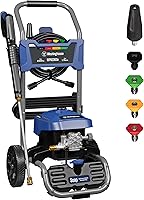
The ePX3500 is the top pick for most homes. It's compact at 16.5 inches tall and 19 pounds, with four quick-lock wheels and a low center of gravity for anti-tipping stability.
It delivers 2500 max PSI and 1.76 max GPM at lowest pressure, or 2000 rated PSI and 1.2 rated GPM. The 25-foot easy-coil hose and 20-ounce onboard soap tank cover decks, driveways, fences and cars.
A total stop system halts the pump when the trigger releases. Westinghouse backs it with a 3-year limited warranty.
Who should choose the Sun Joe SPX3000?
Pick the SPX3000 if you switch between cleaning solutions on one job. It has dual 0.9-liter detergent tanks so you can store two separate mixes.
Five quick-connect tips (0°, 15°, 25°, 40° and soap) and a 34-inch stainless steel lance with brass fittings handle routine outdoor cleaning. It delivers 2030 working PSI and 1.2 GPM, with a 20-foot high-pressure hose.
Sun Joe covers it with a 2-year warranty.
Who should choose the Westinghouse WPX2300e?
The WPX2300e suits bigger surfaces and rougher ground. Its steel frame and 8-inch never-flat wheels roll over driveways and decks, and the 25-foot super-flex hose reaches further.
It delivers 2300 max PSI and 1.76 max GPM at lowest pressure, or 1900 rated PSI and 1.2 rated GPM. A 0.42-gallon soap tank and five nozzles handle walls, fences and patio furniture.
It also takes M22 accessories like surface cleaners and foam cannons. The 35-foot GFCI cord adds reach, and the warranty runs 3 years limited.
How do you keep inlet pressure steady during a job?
Keep the tap wide open and the hose unkinked for the whole pass. Check the inlet screen when the stream weakens, and stop to clear any grit rather than forcing the pump.
Don't run two taps or a sprinkler on the same line while you work.
If the machine starts pulsing, release the trigger, let it settle and check the feed before restarting. Store the hose coiled loosely, not pinched, between jobs.
When the seasons turn, drain and store the unit properly; our guide to how to winterize a pressure washer covers the steps. If you're still choosing a machine, what size pressure washer do I need helps match output to the job.
And if budget is the question, how much does a pressure washer cost breaks down the price tiers.
Bottom line: does a pressure washer need water pressure?
Yes, but a normal garden tap is enough. The pump builds the cleaning pressure; the feed only has to stay steady and air-free.
If your washer pulses or loses power, check the tap, hose and inlet screen before suspecting the machine.
Pick the ePX3500 for most homes, the SPX3000 for dual detergents, or the WPX2300e for bigger surfaces on wheels. Feed it right and it will keep cleaning pass after pass.
Frequently asked questions
Can I run a pressure washer from a rain barrel?
Only if the pump can draw water up from a container. Most home electric washers are designed to be fed from a pressurized tap.
A weak, air-filled feed causes sputtering and can damage the pump, so check the manual before drawing from a barrel.
What happens if water pressure is too low?
The motor may pulse, the spray may stutter, or the machine may cut out on its pressure sensor. Low supply also makes the pump run dry in bursts.
Fix the feed first, then restart and test before blaming the washer.
Does a longer hose reduce water pressure?
Yes, extra length adds friction loss. A very long or coiled-up garden hose delivers less pressure and flow at the inlet.
Use a short, straight hose of the recommended size and keep it free of kinks.
Can I use a pressure washer with a garden hose only?
A garden hose is the normal feed for a home electric washer. Attach the hose to the inlet through the supplied adapter, turn the tap fully on, and bleed air from the line before starting.
No booster pump is needed for most outdoor taps.