Is an Electric Pressure Washer Any Good?
Yes. An electric pressure washer is good for most home cleaning: cars, decks, siding, patios and fences. It falls short only when you need to blast heavy concrete stains over large areas for hours.
On this page (8 sections)
- What is an electric pressure washer actually good at?
- What pressure and water flow do you need for each job?
- Do you need gas power for home cleaning?
- What are the real limits of an electric pressure washer?
- What should you look for in a good electric model?
- Which electric pressure washers are worth a look?
- How do you get good results from an electric washer?
- Is an electric pressure washer any good for you?
Yes. An electric pressure washer is good for most home cleaning: cars, decks, siding, patios and fences.
It falls short only when you need to blast heavy concrete stains over large areas for hours. For a typical house and a typical weekend, an electric unit does the job with less noise, no fuel and much less fuss than a gas model.
The question "is an electric pressure washer any good" comes up because the numbers look modest next to gas. That comparison hides the part that matters.
What decides whether an electric washer cleans well is how its pressure and water flow pair up, and whether you match the tool to the surface in front of you.
What is an electric pressure washer actually good at?
It's good at the jobs most homeowners actually do. That means cars, patio furniture, siding, fences, decks, garage floors, grills and garden paths.
A mid-range electric model in the 2,000 to 2,500 max PSI range has enough force for all of them.
Electric washers win on convenience. There's no fuel to buy or store, no pull cord and no exhaust.
You plug into an outdoor outlet, connect a garden hose and start cleaning.
The trade-off is mobility and total output. A cord limits how far you can reach from an outlet.
Gas units beat electric on raw pressure and run time, which matters only for big, heavy jobs. Our guide to the best electric pressure washer options shows what each class of machine is built to handle.
What pressure and water flow do you need for each job?
About 2,000 to 2,500 max PSI with 1.2 to 1.76 max GPM covers nearly every home task. Pick the higher end for concrete and the lower end for paint and car panels.
Job type decides the real requirement. A small car only needs a gentle fan tip and steady flow.
A stained concrete driveway needs more force and a wider cleaning path.
Here is how common jobs line up with electric power:
- Cars and bikes: 1,200 to 1,600 PSI with a wide tip is plenty. Too much force on paint is a bigger risk than too little.
- Decks, fences and siding: 1,800 to 2,200 PSI cleans grime without carving into wood.
- Patios and concrete: 2,200 to 2,500 PSI plus a turbo nozzle speeds up the work.
- Heavy oil or paint removal: this is where gas starts to earn its place.
If your main use is light cleaning and a budget matters, a budget pressure washer with realistic ratings is a sensible first machine. Check the rated PSI and GPM rather than the biggest number printed on the box.
Do you need gas power for home cleaning?
No, most homes don't. Gas makes sense when you clean large concrete or commercial surfaces often and need hours of run time without a cord.
For a house, a car or two and a patio, electric is the better fit.
Gas units bring more pressure and freedom from outlets. They also bring fuel storage, engine maintenance, exhaust fumes and much more noise.
If you clean a driveway twice a year and wash the car now and then, those costs outweigh the extra force.
Electric models also handle soap well. Many include an onboard soap tank and a soap nozzle, so you can apply detergent to a car or deck before rinsing.
That is enough for typical household dirt and grime.
Pick gas only if you already know you'll clean big, dirty surfaces regularly. For everyone else, the simpler machine is the one that actually gets used.
What are the real limits of an electric pressure washer?
The limits are cords, run time and very tough stains. An electric washer needs an outlet within reach of its cord, and most models are built for a session of cleaning rather than all-day commercial work.
A 25 to 35 foot cord plus a 20 to 25 foot hose gives a useful working radius. Walk around the house and you'll find spots the cord won't reach.
A heavy-duty extension cord helps, but it must be rated for the load and kept clear of water.
Very old, set-in stains can also resist electric pressure. Oil-soaked concrete, peeling paint and thick mildew may need detergent, a second pass or a gas machine.
That's a job question, not a reason to avoid electric for normal cleaning.
Cold water is another limit. Electric units use the tap supply, so grease and tar come off more slowly than with a hot-water machine.
Plan on detergent and a little more time for those tasks.
What should you look for in a good electric model?
Look for honest rated pressure and flow, a comfortable wand and a hose that reaches. A higher max PSI number means little if the rated figure is much lower.
Compare rated PSI and rated GPM first.
Next, check the parts you'll touch. A steel wand and a set of quick-connect nozzles make switching tasks quick.
A long hose and a decent cord reduce how often you move the machine. An onboard soap tank saves carrying a separate bottle.
Weight and wheels decide whether you'll drag it out of storage. Compact models under 20 pounds are easy to carry up steps.
Larger units with big wheels roll over rough ground more easily. Think about where you'll store it and how far you'll move it.
Finally, check the warranty and the pump type. A 2 to 3 year limited warranty is common on good electric models.
An axial pump is standard at this level; it's fine for home use if you keep water flowing and avoid running the unit dry.
What does rated versus max PSI mean on the box?
The max PSI is the peak the pump can hit at its lowest flow, and the rated number is what the machine sustains while cleaning. A unit that lists 2,500 max PSI may be rated at 2,000 PSI and 1.2 GPM, which is still a solid home figure.
Read both numbers and judge the machine on the rated pair, because that is the pressure you will actually use on a driveway or deck. When a listing only shouts the max number, the rated figure tells you more about real cleaning power.
Which electric pressure washers are worth a look?
These three cover the useful range from compact and easy to strong and steady. We compared the specs and features against the jobs above.
Our score weighs those specs and features against what a home user needs from an electric washer.
The first is the easiest to live with day to day. The second brings more force for stubborn concrete.
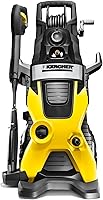
The third splits detergent between two tanks, which helps when you clean a car and a patio in the same session. For brand-specific options, the Kärcher pressure washer lineup is worth a look too.
How do the Westinghouse models compare?
The ePX3500 is the small one: 16.5 inches tall, 19 pounds, four quick-lock wheels that steer through 360 degree turns, and a low center of gravity built into its anti-tipping design. It pairs 2,500 max PSI with 1.76 max GPM at lowest pressure and a rated 2,000 PSI at 1.2 GPM.
The WPX3000e steps up to 3,000 max PSI and a rated 2,600 PSI at 1.1 GPM, with an induction motor, axial three-piston auto-stop pump, steel frame, 10 inch never-flat wheels and a 35 foot GFCI cord. It also takes M22 accessories like surface cleaners and foam cannons.
The ePX3500 has the edge on storage and carrying; the WPX3000e has the edge on force and rolling over rough ground.
How do you get good results from an electric washer?
Match the nozzle to the surface and keep the wand moving. The 0° tip is for tough spots only, never for paint or wood.
Use the 15° or 25° tip for concrete and the 40° tip or soap nozzle for cars and siding.
Work top to bottom and in overlapping passes. Let detergent sit for a few minutes before rinsing so it can loosen dirt.
Rinse the wand and nozzle after each job to keep the flow steady.
Keep the cord and connections dry and away from the spray. Use a grounded outdoor outlet and a GFCI-protected circuit.
Don't run the pump without water for long, and release the trigger when you pause.
A surface cleaner attachment can speed up flat concrete and decks. It spreads the spray over a wider path and reduces streaks.
Check that your model's fittings match the attachment before buying one. A washer with M22 fittings, like the WPX3000e, is easier to pair with those add-ons.
Is an electric pressure washer any good for you?
Yes, if your cleaning is normal home work. Buy electric for cars, decks, siding, patios and fences, and choose a model with honest rated pressure around 2,000 to 2,500 PSI and a hose long enough for your yard.
Pick the compact Westinghouse ePX3500 for easy storage and everyday jobs, the WPX3000e when you face tougher concrete, or the Sun Joe SPX3000 for two-tank detergent cleaning.
Go gas only if you regularly clean large, heavily soiled concrete and need hours of cord-free run time. That's the honest answer to whether an electric pressure washer is any good: for most homes, it's very good indeed.
Frequently asked questions
How many PSI does a home pressure washer really need?
For most home jobs, 2,000 to 2,500 max PSI is enough to clean cars, siding and decking well. Save 2,500 to 3,000 max PSI for concrete and large driveways, and remember rated PSI tells you more than the max number on the box.
Can an electric pressure washer damage a car's paint?
It can if you use too narrow a nozzle at close range. Hold the wand about 2 to 3 feet away, use the 25° or 40° tip, and keep the spray moving in one direction so the paint is not hit in one spot.
Do I need a gas pressure washer for a concrete driveway?
Not always. A 2,500 to 3,000 max PSI electric model with a turbo nozzle handles typical concrete cleaning, just more slowly than gas.
Choose gas only if you clean large concrete areas often or need to run for hours without a cord.
How long can an electric pressure washer run at once?
Most models are built for a full cleaning session of an hour or so without stopping. Take short breaks, keep the cord away from the wand and water, and let the pump rest if the motor feels hot.