How to Pressure Wash a House Without Damaging It
To pressure wash a house without damaging it, use the lowest pressure that cleans, start with a wide spray, and keep the nozzle moving. Work from the ground when possible, follow the siding maker's care instructions, and never spray directly into seams, vents, or electrical openings.
On this page (10 sections)
- How do you pressure wash a house without damage?
- What should you protect before washing?
- How should you prepare the washer and cleaner?
- What is the safest way to apply cleaner?
- How do you rinse siding without forcing water behind it?
- How can you reach high siding safely?
- Which pressure washer is suitable for house washing?
- When should you avoid pressure washing a house?
- How do you pressure wash a house, step by step?
- What should you remember when pressure washing a house?
To pressure wash a house without damage, use the lowest pressure that cleans, start with a wide spray, and keep the nozzle moving. Work from the ground when possible, follow the siding maker's care instructions, and never spray directly into seams, vents, or electrical openings.
Start by checking the surface and the weather. Some siding needs only a garden hose and soft brush, while delicate paint, loose panels, and damaged caulk can be harmed by pressurized water.
How do you pressure wash a house without damage?
Test a wide spray on a hidden area before cleaning the whole house. Hold the nozzle well back, aim at a downward angle, and move closer only if the surface stays intact and more cleaning power is needed.
Use the nozzle and pressure recommended for your machine and siding. A narrow or zero-degree spray can cut into paint, wood, caulk, and softer surfaces, so avoid it on a house exterior.
Keep the wand moving in steady, overlapping passes. Pause the spray before changing direction, and don't hold it in one spot to remove a stubborn mark.
Our beginner's guide to using a pressure washer covers setup and safe handling. If you need to choose a machine first, see the pressure washer buyer's guide.
What should you protect before washing?
Close doors and windows, cover nearby outlets, and move anything that water could damage. Keep children and pets away from the work area, and switch off outdoor electrical equipment where practical.
Cover plants with a light, breathable sheet or rinse them before and after cleaning. Move patio furniture, cushions, grills, and decorations away from the spray path.
Check the exterior for loose siding, cracked caulk, peeling paint, and open gaps. Don't pressure wash a damaged area; water can get behind the surface and worsen the problem.
Avoid spraying directly into soffit vents, light fixtures, vents, or gaps around windows and doors. Keep the spray pointed down and away from openings.
How should you prepare the washer and cleaner?
Connect the washer as its manual directs and use only a cleaner labeled for the surface and machine. Check that the hose, wand, and nozzle are secure before turning on the water or motor.
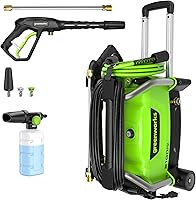
The Westinghouse ePX3500 has a 17.5 in extendable steel wand, five quick-connect nozzles, an onboard soap tank, and a 25 ft hose.
Simple Green Oxy Solve is made for house siding, including vinyl, aluminum, stucco, wood, and brick. Its directions call for wetting the surface at low pressure, applying cleaner at low pressure, letting it sit for 3–5 minutes, then rinsing.
Follow the cleaner label for dilution and dwell time. Don't let detergent dry on the siding, and keep it away from people, pets, and plants as directed.
What is the safest way to apply cleaner?
Apply cleaner to a small section at a time, starting near the bottom and moving upward. This helps limit streaks as the solution runs down the wall.
Use a low-pressure soap setting or another application method approved by your washer and cleaner. Let the cleaner work for the time on its label, but don't let it dry.
Avoid mixing cleaners or adding bleach unless the product and siding instructions specifically allow it. Rinse the soap tank and washer as directed after use.
How do you rinse siding without forcing water behind it?
Rinse from the top down with a wide spray, angled slightly downward. Keep the nozzle far enough from the siding that water doesn't lift paint or drive behind panels.
Work in manageable sections and overlap each pass. Watch the runoff for dirt and soap, and repeat a gentle rinse where residue remains.
Don't aim upward at siding laps or beneath the edges of trim. Avoid spraying directly at windows, door seals, vents, and electrical boxes.
If the surface is vinyl, read our guide to whether you can pressure wash vinyl siding for material-specific precautions.
How can you reach high siding safely?
Stay on the ground when washing upper walls. A telescoping wand can extend your reach, but it adds leverage and can be harder to control when the spray is on.
The JANZ 24 ft Telescoping Wand has four adjustable sections with lever locks and is intended to reach siding, soffits, fascia, and gutters from ground level. It includes three extension wands, a brush head, seven spray nozzles, a pivoting coupler, and a support belt.
The wand works with pressure washers rated up to 4,000 PSI. Check your washer's hose connection and pressure compatibility before using it.
Extend only as far as you can control steadily, and follow the wand instructions. Don't use it near power lines, and don't point the spray toward people, animals, or fragile surfaces.
If you can't reach an area safely from the ground, leave it for a qualified cleaner. Never operate the washer while balancing on a ladder.
Which pressure washer is suitable for house washing?
A washer with controllable pressure and a wide spray option is more useful than choosing by maximum pressure alone. Match the setup to the surface, cleaner, and area you need to wash.
The Westinghouse WPX2300e has five quick-connect nozzles, an onboard soap tank, and a 25 ft hose. Westinghouse describes it for exterior walls and other household cleaning tasks.
Neither washer removes the need to test first and use a gentle approach. For more options, browse our electric pressure washer guide.
When should you avoid pressure washing a house?
Skip pressure washing when the siding is loose, cracked, or damaged, or when the care instructions prohibit it. A low-pressure rinse or soft brush may be a safer way to clean.
Don't wash in strong wind, during a storm, or when the surface is too hot for the cleaner to remain wet. Stop if water starts getting behind panels, paint begins to lift, or the surface changes.
Be cautious around older paint and unknown coatings. If you suspect lead paint or can't tell whether the siding can handle a washer, get qualified advice before cleaning.
How do you pressure wash a house, step by step?
Inspect, protect, test, apply cleaner gently, and rinse from the top down. Take your time, and stop at the first sign of surface damage or water entering a gap.
- Read the washer, cleaner, and siding instructions.
- Close windows and doors, cover outlets, and move nearby items.
- Check for loose panels, gaps, damaged paint, or cracked caulk.
- Connect water and the washer as directed, then test a wide spray in a hidden spot.
- Apply a compatible cleaner at low pressure, working in small sections.
- Rinse from the top down with the nozzle angled away from openings.
- Check the surface and runoff, then rinse again gently if soap remains.
For other exterior projects, see our guides to pressure washing a deck and pressure washing a driveway. The surface and its care instructions should determine the pressure and spray you use.
What should you remember when pressure washing a house?
When deciding how to pressure wash a house safely, protect openings, test first, use a wide spray, and keep water moving downward. Cleaner can help with siding grime, but it doesn't make a damaged surface safe to pressure wash.
Choose a washer with useful nozzle options, such as the ePX3500 or WPX2300e, if you need one for several home tasks. Choose the JANZ wand when ground-level reach is the main issue, and use Oxy Solve only where its label fits the surface.
If the siding is damaged or you can't control the spray safely, stop and use a gentler method or hire a professional.
Frequently asked questions
What pressure should I use to wash a house?
Start with the lowest pressure and widest spray that removes the dirt, then adjust only if needed and safe for the siding. Pressure at the surface changes with the nozzle, distance, and machine.
Check the siding maker's instructions before washing, and try a hidden area first.
Should you pressure wash a house from top to bottom?
Apply cleaner from the bottom upward to reduce streaking, then rinse from the top downward so loosened dirt and soap flow away. Work in small sections and keep the spray moving.
Avoid spraying upward beneath siding laps, roof edges, or vents.
Can you pressure wash vinyl siding?
Many vinyl siding surfaces can be washed with a gentle spray, but the siding maker's care instructions come first. Keep the nozzle angled slightly downward, use a wide spray from a safe distance, and avoid forcing water behind panels.
See our guide to pressure washing vinyl siding.
Is it safe to pressure wash a house from a ladder?
Avoid using a pressure washer while standing on a ladder because the spray can push you off balance. Use a ground-level extension wand only if you can control it safely, or hire a qualified cleaner for high areas.
Never aim a powerful spray near overhead wires.