How to Use a Pressure Washer: A Beginner's Guide
To learn how to use a pressure washer, start with the manual, a wide spray nozzle, and a test on a hidden spot. Keep the wand moving and use only the pressure and detergent the surface can handle.
On this page (10 sections)
- How do you choose a pressure washer for the job?
- How do you set up a pressure washer safely?
- How should you use a pressure washer nozzle?
- How do you test the spray before cleaning?
- What is the safest way to wash a surface?
- When should you use detergent?
- When is a surface cleaner useful?
- What mistakes should you avoid?
- How do you finish and store the washer?
- Which washer should you choose for your first job?
To learn how to use a pressure washer, read the manual, choose a wide spray, test on a hidden spot, and keep the wand moving. Start farther from the surface than you think you need, then adjust only if the material stays intact.
Pressure can strip paint, splinter wood, damage seals, or push water behind siding. Wear eye protection and closed-toe shoes, keep people and pets clear, and never point the spray at a person, animal, or electrical equipment.
How do you choose a pressure washer for the job?
Choose a washer that fits the surfaces you clean, the storage space you have, and the accessories you need. For routine home jobs, an electric model is a practical starting point; compare working pressure and water flow, along with hose length, nozzle choices, and detergent options.
The Sun Joe SPX3000 offers five quick-connect tips, from a narrow 0° stream to a wide 40° fan, plus two onboard detergent tanks. It suits someone who wants several spray choices and separate detergent storage for different tasks.
The Kärcher K1700 has three nozzles, a detergent tank, never-flat wheels, and an on/off foot switch. Choose it if you want a wheeled washer with simple foot-controlled operation; skip it if you need more spray-tip options.
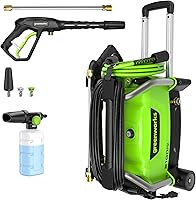
The Westinghouse ePX3100v weighs about 18 lb and includes a built-in carry handle and detachable foam cannon. Its compact form suits buyers who want to carry and store the washer easily, especially when detergent application is part of the plan.
If you're deciding between fuel types or comparing pressure and water flow, start with electric vs gas pressure washers and pressure washer GPM vs PSI. A bigger pressure number alone doesn't tell you whether a washer is the right fit for a particular surface.
How do you set up a pressure washer safely?
Set the washer on stable ground, connect its water supply, and clear the work area before starting. Follow the manual for water, power, detergent, and startup steps, since connections and controls vary by model.
For an electric washer, use the outlet and cord setup the manual allows, and keep electrical connections away from water. For a gas washer, follow its fuel and outdoor-use instructions.
Inspect hoses and fittings for damage, and don't use a machine with a leak or frayed cord. Connect the garden hose and pressure hose as directed, turn on the water, and purge air from the system using the manual's procedure before powering the washer.
Close windows, move outdoor furniture and loose items, and check where runoff will go. Protect nearby plants and delicate objects when needed, and keep the work area clear of people and pets.
How should you use a pressure washer nozzle?
Start with the widest spray pattern that can do the job. A broad fan is easier to control than a narrow, concentrated stream, and you can move closer or change tips after checking how the surface responds.
Nozzle colors and angles differ by brand, so follow the manual instead of relying on color alone. A 40° tip makes a wider pattern than a 15° tip, while a 0° tip concentrates water into a narrow stream that can damage surfaces quickly.
The SPX3000 includes 0°, 15°, 25°, 40°, and soap tips. That range makes it adaptable, but narrow tips are a poor starting choice for siding, wood, painted surfaces, and other materials that can be marked by concentrated spray.
Don't choose a narrow jet just because you want to finish faster. For guidance on how pressure and flow work together, see pressure washer GPM vs PSI.
How do you test the spray before cleaning?
Test the spray on a hidden, sturdy area before cleaning the main surface. Hold the wand several feet away and move closer in small steps only if the material tolerates it.
Point the nozzle down and away from people, pets, windows, vents, and light fixtures. Use short passes and watch the surface; stop if paint lifts, wood fibers rise, or water gets behind a seam.
The K1700 includes a 15° nozzle, a turbo nozzle, and a detergent nozzle. Its on/off foot switch and 0.5 gal detergent tank make it a straightforward choice for someone who wants basic nozzle variety and onboard soap storage.
A turbo nozzle can deliver a forceful spray, so don't assume it's safe for a delicate surface. Check the washer manual and surface maker's care instructions before using it.
What is the safest way to wash a surface?
Make steady, overlapping passes while keeping the nozzle at a consistent distance. Start with the widest nozzle or lowest pressure setting the washer allows, then increase cleaning force only when needed and the material remains intact.
For vertical surfaces, work from the top down so dirt and cleaner flow away from areas you've already rinsed. On flat areas, guide runoff away from doorways, drains, and people.
Avoid spraying directly into joints, gaps, vents, electrical boxes, and window seals. Keep the wand moving instead of holding the spray in one spot, which can gouge or discolor a surface.
Use extra care around siding, trim, and windows. Read how to pressure wash a house without damaging it before cleaning a home's exterior, and check how to pressure wash a wood deck before choosing a tip or distance for outdoor wood.
When should you use detergent?
Use detergent when it can help loosen grime, and choose a cleaner approved for both your washer and the surface. Follow the cleaner label for dilution, dwell time, and rinsing.
Apply soap with the washer's detergent setting or an approved foam cannon. Don't put detergent through a high-pressure nozzle unless the manual says to; soap tips usually apply it at lower pressure.
The ePX3100v's detachable foam cannon suits jobs where applying detergent is part of the process, including vehicles, fences, and patio furniture. Its compact body and carry handle also make it a reasonable choice if storage and portability matter.
Let cleaner sit only as long as its label allows, and don't let it dry on the surface. Rinse from top to bottom, and keep detergent runoff away from plants and storm drains when the cleaner label or local rules require it.
Never mix cleaning chemicals. Don't put bleach in the pump unless the washer maker explicitly approves it, and rinse the machine as directed after detergent use.
When is a surface cleaner useful?
A surface cleaner can help you cover broad, flat areas with even passes. Use one only if its connector and pressure range match your washer, and follow its instructions.
The Westinghouse 16.5 in surface cleaner has a 1/4 in quick-connect fitting and is compatible with most gas and electric pressure washers. Its 16.5 in cleaning area is designed for flat surfaces such as patios, driveways, and decks; skip it if you mainly clean cars, fences, or other narrow and detailed areas.
Move the attachment at a steady pace, overlap passes, and keep it away from edges where spray could hit siding or landscaping. For concrete, see how to pressure wash a driveway; for a full attachment walkthrough, read how to use a pressure washer surface cleaner.
What mistakes should you avoid?
The most common mistakes are starting too close, using a narrow tip too soon, and holding the spray in one place. Each can mark a surface before you have time to react.
A few other habits make cleaning harder or less safe:
- Skipping the manual's startup and shutdown steps.
- Spraying toward people, windows, vents, electrical equipment, or gaps in siding.
- Letting detergent dry before rinsing.
- Using a cleaner or attachment that isn't approved for the washer and surface.
- Ignoring runoff and nearby plants, doors, or drains.
If the surface begins to change, stop and back away. Recheck the nozzle, distance, and care instructions before deciding whether to continue.
How do you finish and store the washer?
Turn off the washer, release pressure, and disconnect it using the manual's shutdown steps. Don't tug on a hose or power cord to disconnect it.
Rinse any remaining detergent from the surface and machine as instructed. Let the equipment cool if needed, then drain and store hoses and accessories the way the manual specifies.
Keep the nozzles together so you can identify them next time. Before storing the washer for cold weather, follow how to winterize a pressure washer.
Which washer should you choose for your first job?
Choose the Sun Joe SPX3000 for its five spray tips and two detergent tanks, the Kärcher K1700 for wheeled maneuverability and simple foot control, or the Westinghouse ePX3100v for a compact washer with a foam cannon. Add the Westinghouse surface cleaner if you have broad, flat areas and a compatible washer.
Before you decide how to use a pressure washer on your first job, match the washer and nozzle to the surface, test a hidden area, and work in slow passes. Read the manual for setup and shutdown, then follow the surface and detergent care instructions.
Frequently asked questions
What nozzle should a beginner use on a pressure washer?
Start with the widest spray pattern approved for your washer and surface, then test it on a hidden spot. A wider fan is usually easier to control than a narrow jet.
Follow the manual's nozzle guidance, and don't use a zero-degree tip on a surface unless its maker specifically allows it.
Should you wet a surface before pressure washing?
Rinse loose dirt first if the surface and nearby area can handle the water. Pre-wetting can help you see how water drains and can keep detergent from drying too quickly, but follow the cleaner's label and the surface maker's care instructions.
How far away should you hold a pressure washer wand?
Begin several feet away and move closer only if the surface is holding up and more cleaning is needed. The safe distance depends on the washer, nozzle, material, and dirt.
Keep the spray moving, test out of sight, and stop if paint, wood fibers, or grout begin to lift.
Can you use any soap in a pressure washer?
No. Use only detergent approved for your washer and the surface you're cleaning, following both labels.
Some machines have a tank or foam cannon, while others need a separate method.
Never put bleach or an unapproved chemical into the pump.