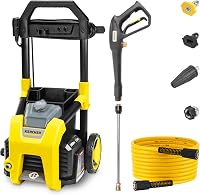
Can You Use a Pressure Washer on a Car?
Yes, you can use a pressure washer on a car, but only with a wide fan tip and the nozzle kept about 12 to 24 inches from the paint. A narrow jet at close range can strip clear coat, which is the damage people worry about most.
On this page (9 sections)
- Does a pressure washer damage car paint?
- What PSI and nozzle should you use on a car?
- How do you wash a car with a pressure washer step by step?
- Which parts of a car should you never pressure wash?
- What about wheels, tires and the underbody?
- Can you use a pressure washer for rinsing and drying?
- Does a pressure washer strip wax or sealant?
- How do you store the washer after a car wash?
- The bottom line on pressure washing a car
Yes, you can use a pressure washer on a car, and it's one of the fastest ways to remove road salt, mud and bug film before a hand wash. The catch is that pressure does damage when it's pointed wrong, so control the tip and the distance rather than the trigger.
A home electric machine is the safer tool here. Gas models can push far more water and pressure than car paint needs, and you gain nothing on a sedan by using a driveway blaster.
If you're still choosing a machine for mixed jobs, our guide to the best pressure washer for home use covers the models that handle cars and patios without drama.
Does a pressure washer damage car paint?
It can, but only when the jet is narrow and close. Water at 1,800 PSI through a 40 degree tip is gentle at 2 feet, while the same pressure through a 0 degree tip at 3 inches will score paint and lift clear coat.
Clear coat is the thin protective layer above the color. Once it is breached, moisture and UV work on the paint underneath, and repair means repainting the panel.
That's why the tip choice matters more than the machine's advertised pressure. The other risk is grit, because a hard jet on a dusty panel drives sand across the surface like sandpaper.
Rinse loose dirt away from a distance first, and only then move in with soap and a wider fan.
What PSI and nozzle should you use on a car?
Stay in the 1,200 to 2,000 PSI range with the 25 or 40 degree tip. That covers most electric pressure washers sold for home use, including the models in our how to use a pressure washer walkthrough.
The two tips that should never touch a car are the 0 degree pin jet and the 15 degree tip at short range. The 25 degree tip works for wheels, arches, mats and the lower body where dirt is heavy, and the 40 degree tip is the safe choice for the roof, hood and doors.
Soap tips are wider still and are designed for detergent, not for blast cleaning. Use one for a pre-soak, then rinse with a 40 degree tip from a distance.
How do you wash a car with a pressure washer step by step?
Rinse, foam, dwell, agitate, rinse, dry is the order that works. Each step does one job, and the pressure only appears in the rinse and the heavy-dirt passes.
- Park in shade and let the panels cool, so soap doesn't dry on the paint.
- Rinse the car from top to bottom with the 40 degree tip, standing back.
- Apply soap with the soap tip, starting at the roof and working down.
- Let the foam sit for a few minutes, but don't let it dry.
- Use a wash mitt for the contact wash, then rinse with the wide tip.
- Dry with a microfiber towel or a blower before water spots form.
Wheels and tires come last with their own bucket and a wheel brush, so brake dust doesn't transfer to the body.
Where does a foam cannon or soap applicator fit in?
A soap applicator or foam lance turns the job into a pre-soak, which loosens grime before you touch the paint. The Sun Joe SPX3000 includes a soap tip among its five quick-connect nozzles, and its two 0.9L detergent tanks let you keep one detergent for the car and another for the patio.
Its 20 foot hose and 34 inch stainless lance reach across a sedan from one side, but its working pressure exceeds the recommended car-washing range. Use the 40 degree tip on paint and keep the nozzle at distance, and save the narrower tips for wheels and sills.
Which parts of a car should you never pressure wash?
Skip the engine bay, the paint around chips and any damaged trim. Water forced past a seal or into a wiring connector causes problems that show up days later.
- Open window seals and sunroof drains, where water can enter the cabin.
- Peeling or bubbling paint, where the jet lifts the edge further.
- Wheel bearings and brake calipers, sprayed directly at close range.
- Aftermarket decals and vinyl wraps, which can lift at the edges.
- Convertible soft tops, which hold water and can stretch.
If the car's manual names a no-wash zone, that's the final word. Otherwise treat any gap, seal or electrical part as a keep-away area.
What about wheels, tires and the underbody?
Wheels and arches are where a pressure washer earns its keep, because that's where brake dust and road salt collect. The 25 degree tip at 12 to 18 inches clears them without touching the paint.
Work one wheel at a time, and don't aim into the hub gap at close range. Bearing seals and brake components don't benefit from a direct hard jet.
The underbody is the other good use. A wide fan tip from a distance lifts salt and mud from the sills and subframe, which is the main reason people buy a washer for winter care.
Do it outdoors, and expect a lot of splash.
Can you use a pressure washer for rinsing and drying?
Yes, and a wide rinse is one of its best jobs. A 40 degree fan pushes standing water off flat panels, which shortens drying and reduces water spots.
After the final rinse, switch to a blower or a microfiber towel to finish. A pressure washer can't dry a car on its own, and blasting a wet panel longer just splashes dirty water back on it.
If you're planning a full exterior clean, our guide to the best pressure washer for driveway shows how the same machine handles concrete between car washes. Keep a separate tip set or mark the car tips so you don't grab the wrong one.
Who needs the JANZ telescoping wand for car cleaning?
The JANZ wand helps if you wash tall vehicles, vans or RVs where the roof is out of reach from the ground. Its four aluminium sections extend to 24 feet, and its 3/8 inch quick-connect inlet with two hose adapters fits most pressure washer hoses.
The soft padded grip and support belt cut the strain of holding a long wand overhead, and the brush head suits scrubbing stubborn film on a van roof. For a normal sedan, the wand is more tool than you need, so the stock lance does the job.
Does a pressure washer strip wax or sealant?
It can strip wax, especially at high pressure and close range. Wax sits on top of the clear coat, and a strong jet removes it along with the dirt.
That's not a reason to avoid the washer. Wash with a wide tip, then reapply wax or a spray sealant after drying, and the protection comes back.
Think of it as scheduled maintenance rather than a loss.
A ceramic coating is harder and holds up better to a wide fan, but the same rule applies: distance and a 40 degree tip make the difference.
How do you store the washer after a car wash?
Flush the soap line, empty the tanks and run the pump dry before the machine sits. Detergent left in the system can clog the nozzle, and water left in the pump can freeze in cold weather.
The Kärcher Pump Guard protects the pump from freezing down to -25 F and adds lubrication to the valves and seals. It works with all brands of gas and electric pressure washers.
Car washing puts the machine away wet more often than patio work does, so a pump treatment before winter is cheap insurance. Run clean water through the soap injector first, then follow the pump guard instructions.
The bottom line on pressure washing a car
You can use a pressure washer on car paint safely when you pick the 40 degree tip, stay 12 to 24 inches back, and let soap do the loosening. The machine is not the danger; the narrow tip at close range is.
Buy a washer with a real tip set and a soap option, keep one tank for car detergent, and store the unit dry with a pump treatment before the cold sets in. Reapply wax after the wash and the finish stays protected.
If you want a machine that handles cars, patios and driveways without a second purchase, our best pressure washer for home use picks are the place to start. For runoff and dirt on concrete, the pressure washer for driveway guide covers the cleaning side.
If you're adding a surface cleaner to the kit, read how to use a pressure washer surface cleaner first, so the attachment stays on concrete and away from the car.
Frequently asked questions
Can you use a pressure washer on a car without damaging the paint?
Yes, if you use a 25 or 40 degree tip and keep the nozzle 12 to 24 inches from the surface. Most home electric washers deliver 1,200 to 2,000 PSI, which is safe at that distance.
Never use a 0 degree tip on body panels.
What PSI is safe for washing a car?
Around 1,200 to 2,000 PSI is the safe working range for most car paint. Power comes from the combination of PSI and the nozzle, so a wide fan tip at 1,800 PSI is gentler than a narrow jet at the same pressure.
Can a pressure washer remove car wax?
Yes, a strong jet will strip wax along with dirt. If you want to keep a wax layer, wash at a wide angle with a soap tip and apply fresh wax or sealant afterward.
That is normal maintenance, not damage.
Should I pressure wash the engine bay?
No, unless your car's manual allows it. Water can reach electrical connectors and sensors, and the risk of a no-start or a costly repair is not worth it.
Use rags and a fender brush around the engine instead.
How far should the wand be from the car?
Keep the tip at least 12 inches from any painted surface and closer to 24 inches on soft or freshly painted panels. Move steadily and keep the spray angled down, so water and grit run off rather than sit against the paint.